


Medicare Myths: 7 Common Misunderstandings Explained
If you’ve ever tried to understand Medicare, you’ve probably run into a few Medicare myths that made things more confusing than they needed to be.
You read something, pause, and think, “Wait, is that actually true?”
That’s because a lot of what people believe about Medicare doesn’t come from clear explanations. It comes from things they’ve heard over time. A friend says one thing. A commercial says another. Suddenly, it all starts blending together.
The problem is, those small misunderstandings can turn into big mistakes. So if you’re sorting through Medicare right now, or helping someone you care about, it helps to slow down and separate what’s true from what just sounds true. Here are seven of the most common Medicare myths, and the facts behind them.
Myth #1: Medicare Covers Everything
This is usually the first assumption people make. You turn 65, enroll in Medicare, and your healthcare is fully covered. No stress. No surprises.
But Medicare covers a lot, not everything. There are still deductibles, copays, and services that fall outside of coverage. Things like routine dental care, eyeglasses, hearing aids, and long-term care usually aren’t included in Original Medicare.
This is often the moment people say, “I thought that was covered.” It’s an easy mistake to make. Because of those gaps, many people add extra coverage to help with certain out-of-pocket costs. The key is knowing what’s included before those surprises show up.

Myth #2: Medicare Is Completely Free
You’ll hear this one all the time: “Once you hit 65, everything is covered.” That’s not quite how it works.
Most people qualify for premium-free Part A because they or their spouse paid Medicare taxes while working. But other parts of Medicare still come with costs, like monthly premiums, deductibles, copays, and coinsurance. In 2026, the standard Part B premium is $202.90 a month.
Waiting too long to sign up for certain parts of Medicare can also lead to late enrollment penalties that can last as long as you have that coverage.
None of this is meant to scare you. It’s just something people aren’t always told upfront. When you know what to expect, it’s a lot easier to plan for it.

Myth #3: You Can Sign Up for Medicare Anytime
This one tends to catch people off guard. A lot of people assume Medicare works like other things, and that they can sign up whenever it feels right.
But Medicare runs on a schedule. There are specific enrollment periods, and missing them can lead to delays in coverage or higher costs later on.
That’s why it helps to look at your options before you become eligible. Even if you’re not ready to make a decision yet, having a general idea puts you in a much better position.

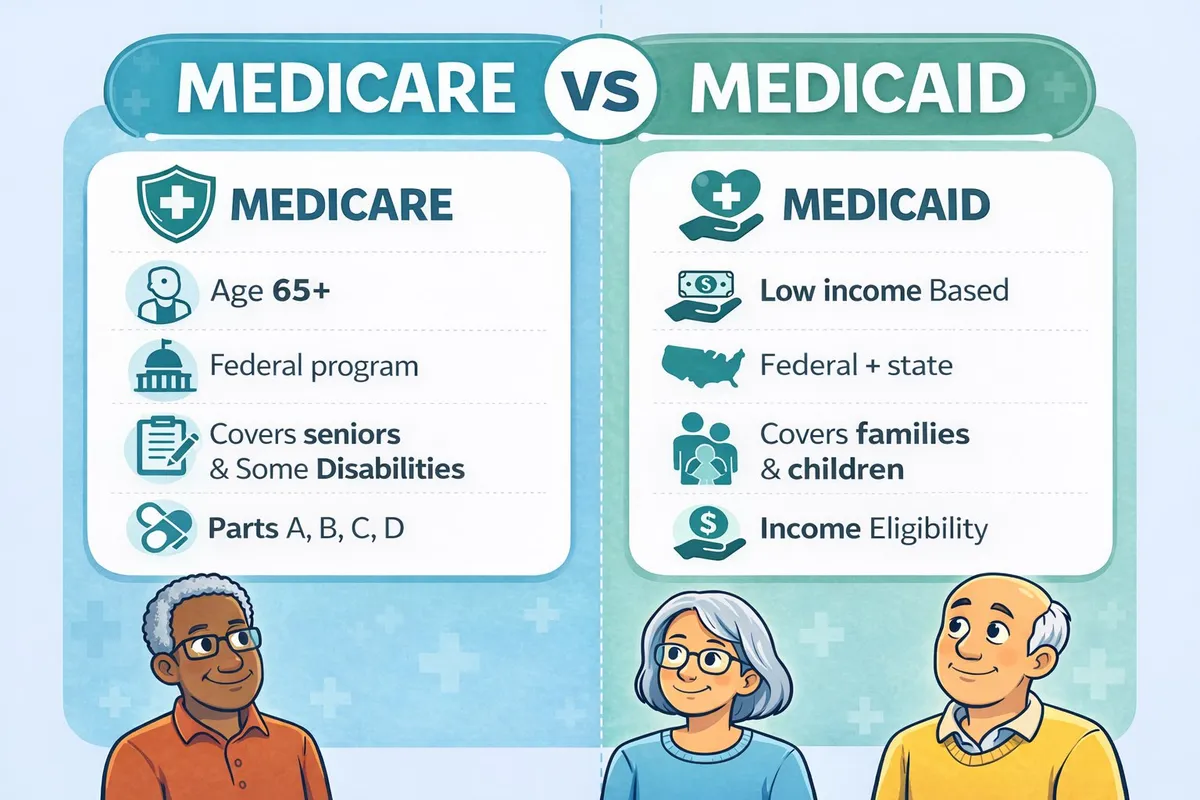
Myth #4: Medicare and Medicaid Are the Same Thing
These two get mixed up more than you’d expect. The names sound alike, and people often use them interchangeably. But they’re very different programs.
Medicare is mainly based on age or certain disabilities.
Medicaid is based on income and financial need.
Some people qualify for both, which is called dual eligibility, but the two programs play different roles. If you’re helping a loved one, this is one of those details that’s worth clearing up early. It avoids a lot of confusion down the road.
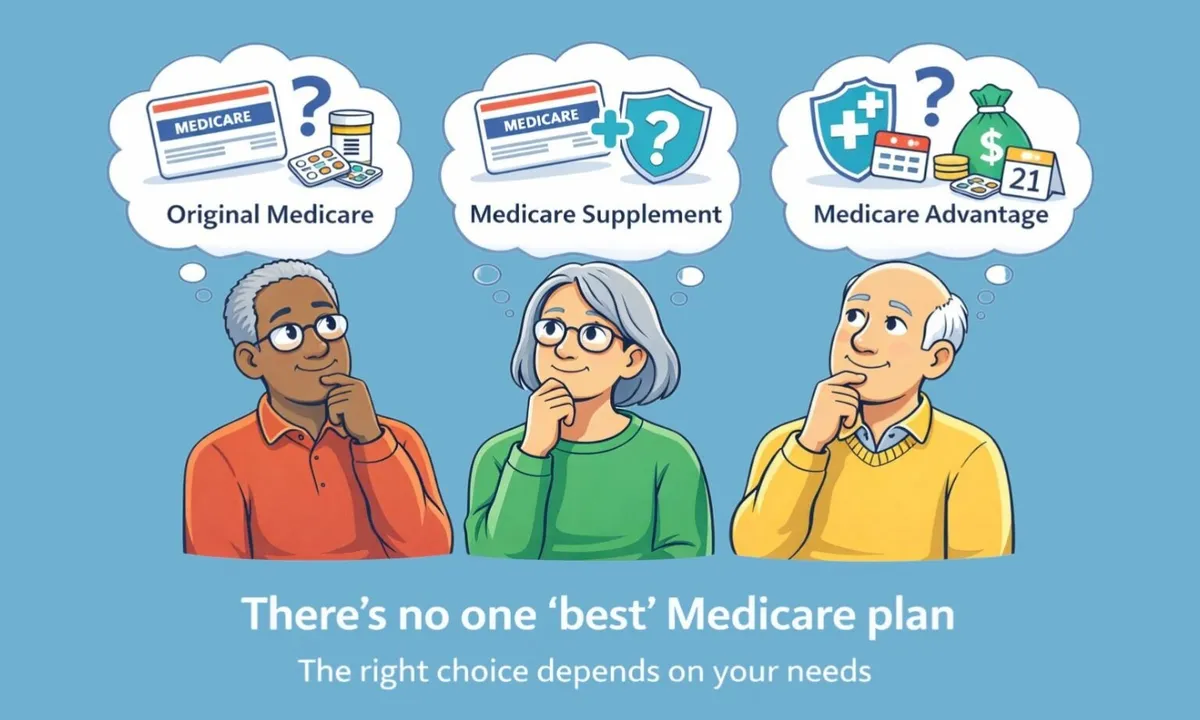
Myth #5: There’s One “Best” Medicare Plan
This is where things can start to feel overwhelming. People ask, “What’s the best plan?” or “Which one should I pick?”
The honest answer is: it depends. Some people choose Original Medicare with a Medicare Supplement and a Part D drug plan. Others look at Medicare Advantage plans offered by private insurance companies approved by Medicare.
The right choice comes down to real-life questions:
• Which doctors do you want to keep?
• Which prescriptions do you take?
• What are you comfortable spending?
• How often do you need care?
What works perfectly for one person might not work at all for someone else, even a close friend or neighbor.
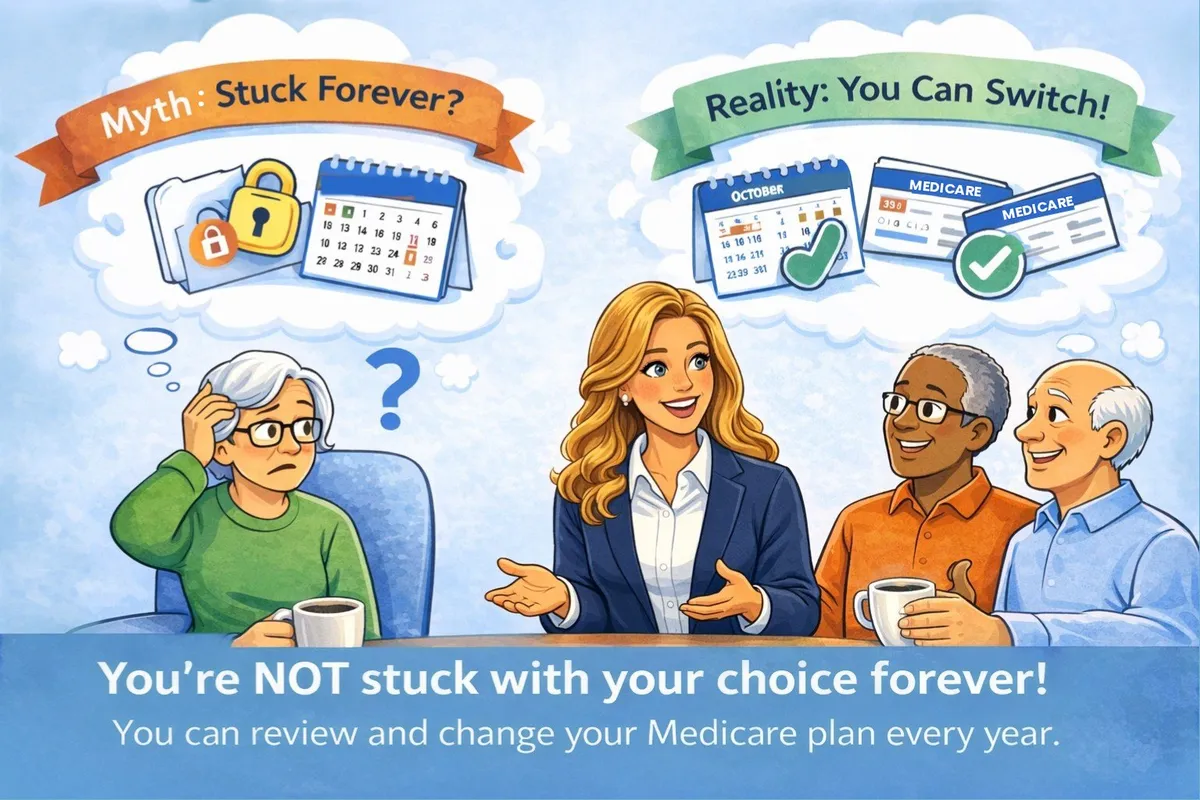
Myth #6: You’re Stuck With Your Choice Forever
This is where a lot of the pressure comes from. People feel like they have to get everything exactly right the first time. No mistakes. No second chances.
But Medicare doesn’t work like that. There are set times each year when you can review your coverage and make changes. During Annual Open Enrollment, October 15 to December 7, you can switch Medicare Advantage or Part D plans for the next year.
So if your health, your doctors, or your budget change, your plan can change with you. Just know that switching into a Medicare Supplement later may involve health questions in some states, so that choice deserves extra thought up front.
That flexibility takes a lot of weight off the decision.
Myth #7: You Have to Figure It All Out Alone
This one might be the most stressful of all. A lot of people sit at their kitchen table trying to piece everything together on their own. Tabs open. Notes everywhere. Still unsure.
It doesn’t have to be that way. Some people prefer official resources like Medicare.gov and 1-800-MEDICARE. Others choose to talk things through with a licensed insurance agent who can explain their options and compare plans.
Either way, having some guidance can make the process feel a lot more manageable. Sometimes just having someone say, “Here’s what this actually means,” makes all the difference.

Medicare Myths vs. Facts: A Quick Recap
The Bottom Line
Medicare can feel complicated at first. That’s normal. But most of the confusion doesn’t come from the system itself. It comes from the myths people carry into it.
Understanding the truth behind common Medicare myths helps you make better, more confident decisions. You can slow down, ask the right questions, and move forward knowing what to expect.
And if you’re helping someone else through it, that clarity doesn’t just help you. It helps them feel a whole lot less alone in the process.
IMPORTANT NOTE: This guide is for general educational purposes only. It is not personalized insurance, legal, or financial advice. It is not affiliated with or endorsed by the U.S. government, the Centers for Medicare & Medicaid Services (CMS), or the federal Medicare program. Medicare rules, coverage, and costs can change, often every year. For official information, visit Medicare.gov or call 1-800-MEDICARE (1-800-633-4227), TTY 1-877-486-2048. For help with your own situation, talk with a licensed insurance agent at Avelan Health: (505) 408-5984.
